10/29/2026
Who May Be Liable if a Construction Accident Leads to Catastrophic Burn Injuries?


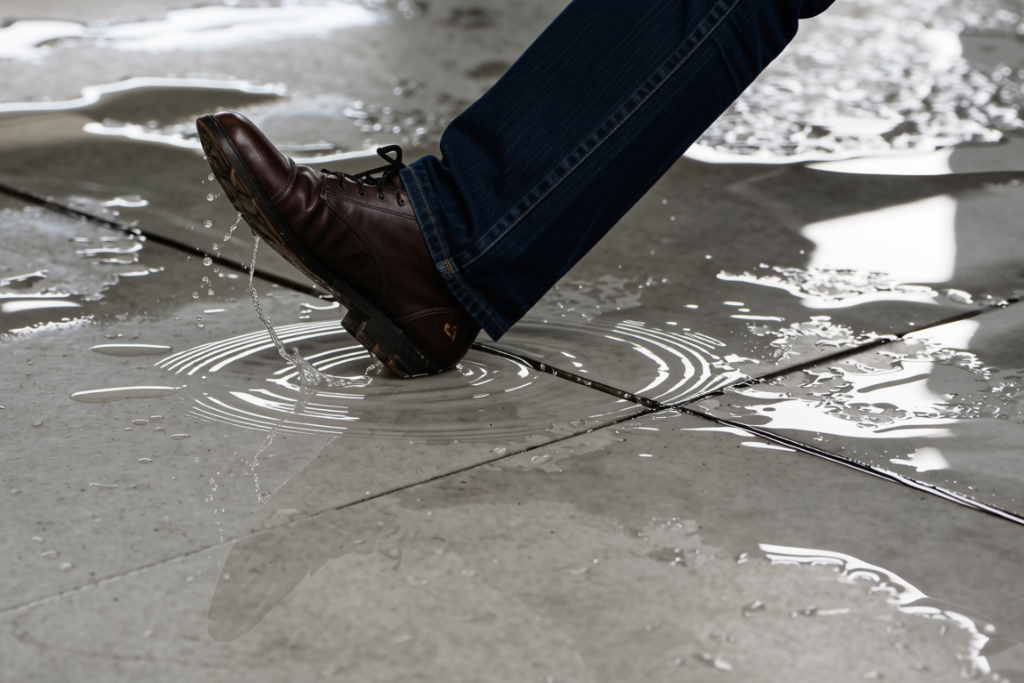
A business is not automatically liable every time someone slips on a wet floor. A California premises-liability claim generally asks whether there was a dangerous condition, whether the business knew or reasonably should have discovered it, whether it failed to use reasonable care, and whether that failure caused an injury and resulting losses. The answer depends on the evidence, including what the business knew and how it inspected and maintained the area.
If you fell at a store, restaurant, hotel, office, or other Santa Rosa business, take care of your health first. Then preserve the details of the fall and the conditions around it.
A premises-liability case usually requires evidence of a duty of care, a dangerous condition, notice of that condition, a failure to act reasonably, causation, and damages. California Civil Code section 1714 sets out a general duty to use ordinary care, while California jury instructions explain how the elements may be presented to a jury.
Actual notice means the business knew about the spill or hazard. Constructive notice may be shown when the condition existed long enough, or occurred often enough under the circumstances, that a reasonable inspection should have found it. There is no universal number of minutes that automatically creates notice. Courts consider the evidence and surrounding circumstances.
Evidence about how the floor became wet can help explain what the business should have done. A spill may have been caused by a customer, a leaking cooler, tracked-in rain, a cleaning operation, or a recurring condition. If an employee created the hazard, that may affect what the business knew. If the source is unknown, inspection and maintenance practices may still be relevant.
Sweep logs, inspection schedules, incident reports, maintenance records, employee testimony, and surveillance footage can help establish when a hazard appeared and how staff responded. A business may have routine procedures, but the existence of a policy alone does not establish that the floor was reasonably inspected on the day of the fall. The timing and accuracy of records matter.
A warning sign may be relevant, but its presence does not automatically defeat a claim, and its absence does not automatically prove liability. Consider where the sign was placed, whether it was visible from the approach, whether it described the danger, and whether the floor remained unsafe. The business may also need to take reasonable steps to address the hazard itself.
The business or insurer may argue that a visitor should have noticed the spill or was distracted. California comparative-fault principles allow a person’s own conduct to be considered; any effect on recovery depends on the facts and applicable law. Visibility, lighting, floor color, the person’s path, and whether the hazard blended into the surroundings may all matter. A claim is not decided simply because the spill was technically visible in a photograph taken later.
If you can, photograph or video the exact location, the wet area, nearby warnings, lighting, and the path you took. Keep the shoes and clothing you wore. Get names and contact details for witnesses, ask for the incident-report number, and save receipts or messages. Write down the date, time, and what happened while your memory is fresh. Seek medical care and keep your treatment records.
Promptly ask the business to preserve surveillance footage and inspection or incident records from the relevant area and time. Do not enter an unsafe location to take pictures, and avoid altering the original files.
A claim may include reasonable medical expenses, lost income, future care, and noneconomic harm such as pain or limitations on daily activities. The type and amount of damages depend on the injury and evidence. Treatment records, wage documentation, and information about recommended future care can help show the effect of the fall.
Do not assume an estimate or an initial diagnosis fully captures the long-term impact.
A personal-injury lawsuit in California generally must be filed within two years, but exceptions apply. A claim involving a public entity may require a much shorter government-claim process. An insurance investigation or settlement discussion does not necessarily pause a filing deadline.
Review the California Courts deadline information promptly and get advice if you are unsure which rule applies.
We represent injured people in Santa Rosa premises-liability matters. We can review the circumstances of a wet-floor fall, including notice, inspection practices, warnings, and evidence that may need to be preserved. Call (707) 244-6050 to discuss your situation.
Read about our premises liability representation and Santa Rosa personal injury office, or contact Hansen, Frisbie & Clausen.
Not automatically. The absence of a sign is one fact. Liability generally depends on whether the business knew or should have known about the hazard, acted reasonably, and caused an injury.
That fact may be considered when evaluating visibility and comparative fault, but it does not decide the claim by itself. Lighting, contrast, distractions, and the location of the spill can matter.
There is no universal minute-count. The length of time is considered along with the spill’s appearance, inspection practices, recurrence, and other evidence.