09/22/2026
Wildfire Injury and Property Damage Claims in Sonoma County: What Victims Can Recover


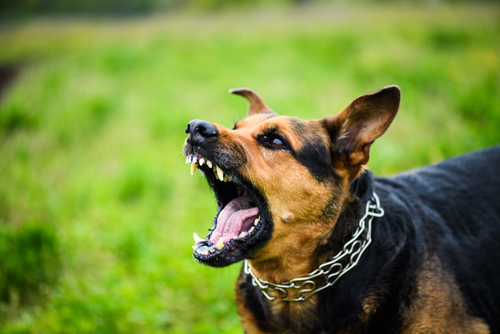
California holds dog owners strictly liable for injuries caused by their dog’s bite, meaning an injured victim generally doesn’t need to prove the owner was negligent or that the dog had a history of aggression. This is a significant departure from the rules in many other states, and it’s one of the most important things to understand if you or a loved one has been bitten.
At Hansen, Frisbie & Clausen, we’ve helped individuals and families throughout Sonoma County navigate personal injury claims with confidence for more than five decades. Our knowledge extends to dog bites, where our dog bite lawyers have years of experience helping those in need. If you were bitten by a dog in California, call (707) 244-6050 to talk with our team about your rights.
Under California Civil Code Section 3342, a dog owner is generally liable for damages caused by their dog biting another person, regardless of whether the owner knew the dog was dangerous or took reasonable precautions to prevent the bite.
This means the focus of a claim is typically on whether the bite happened and where the victim was located at the time, rather than on the owner’s prior knowledge or conduct.
Many other states follow what’s commonly called a “one-bite rule,” which requires an injured person to prove the owner knew or should have known the dog had dangerous tendencies, often because of a prior bite or aggressive behavior.
California’s strict liability approach removes that burden for qualifying dog bite claims, making it generally easier for victims to establish liability compared to states that still follow this older standard.
California’s strict liability statute applies to victims who were bitten while lawfully on public or private property. This distinction matters because it shapes who can bring a claim under the strict liability statute versus who may need to rely on a different legal theory.
Being lawfully present generally means you were on public property, or on private property with the owner’s permission, whether express or implied.
This can include invited guests, delivery workers performing their job duties, and members of the public in spaces open to them. Someone who was trespassing at the time of the bite generally falls outside the protection of the strict liability statute, though other legal theories may still apply.
California’s strict liability rule isn’t absolute, and certain situations can create exceptions or defenses for a dog owner.
A dog owner may have a valid defense if the victim was trespassing on the property at the time of the bite, if the victim provoked the dog in a way that led to the bite, or if the dog was a police or military dog acting within the scope of its duties at the time of the incident. Each of these defenses depends heavily on the specific facts involved, and none of them automatically defeats a claim without a closer look at what actually happened.
Even in a strict liability case, a victim’s own conduct can potentially reduce their compensation under California’s comparative negligence principles.
If evidence shows the victim did something that contributed to the incident, short of provocation that would serve as a full defense, this can factor into how damages are ultimately calculated, though it doesn’t necessarily eliminate the claim entirely.
Damages in a California dog bite case can include medical expenses, scarring and disfigurement, lost income, pain and suffering, and, in more severe cases, costs related to psychological trauma or long-term disability.
In many cases, a dog owner’s homeowner’s or renter’s insurance policy will cover the resulting liability, though this depends on the specific policy and its terms. Identifying and confirming applicable insurance coverage is often an important early step in a dog bite claim.
For more than five decades, our team at Hansen, Frisbie & Clausen has helped individuals and families throughout Sonoma County navigate personal injury matters with clear communication, practical advice, and personalized representation. Our attorneys bring diverse backgrounds, including former prosecutors and decades of trial experience, giving our clients the benefit of multiple perspectives while staying focused on one goal: helping you move forward with confidence.
Whether your case involves a straightforward strict liability claim or one of the exceptions discussed above, our dog bite lawyers are ready to help you understand your options. Review our broader personal injury practice and our guidance on what to do immediately after a dog bite for more details.
Contact Hansen, Frisbie & Clausen at (707) 244-6050 today to get the help you need.
Generally, yes, under California’s strict liability statute, as long as the victim was lawfully on public or private property at the time of the bite. This removes the need to prove the owner knew the dog was dangerous, though certain exceptions and defenses can still apply depending on the facts.
It doesn’t matter under California’s strict liability rule. Unlike states that follow a “one-bite rule,” California doesn’t require an injured victim to prove the dog had a prior history of biting or aggression in order to hold the owner liable.
These situations can serve as defenses to strict liability. If the dog was provoked in a way that led to the bite, or if the victim was trespassing at the time, the owner may have a valid defense, though a case-specific review of the facts is necessary to determine how these issues apply to your situation.
California generally imposes a two-year statute of limitations on personal injury claims, including most dog bite cases, measured from the date of the bite. Because missing this deadline can permanently bar your ability to recover compensation, it’s important to speak with an attorney well before that window closes.